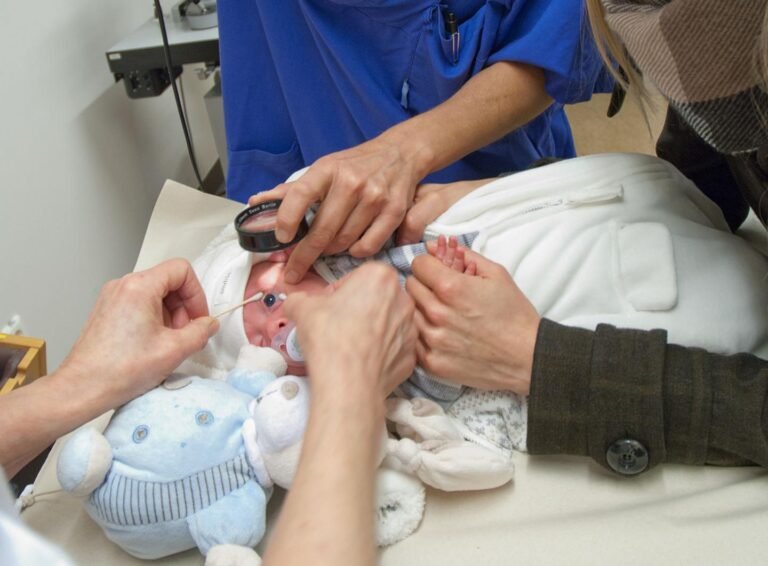
ROP Care
Retinopathy of Prematurity (ROP) is an eye condition that affects some premature infants, where the development of retinal blood vessels after birth becomes abnormal. The retina, the light-sensitive tissue lining the back of the eye, is essential for vision. In ROP, the abnormal growth of blood vessels can lead to bleeding, scarring, or even retinal detachment, which may cause permanent vision loss if left untreated.
While most premature babies do not develop ROP, those who do often experience only mild changes that resolve on their own. However, moderate to severe ROP may require prompt intervention such as laser therapy, cryotherapy, or in rare cases, surgical treatment to preserve vision.
Early diagnosis is crucial. At Klariti Eye Care Hospital, we provide expert ROP screening and management to protect the vision of premature and high-risk infants. We recommend routine eye evaluations by a Paediatric Ophthalmologist, especially for babies who are born before 34 weeks of gestation, weigh less than 2,000 grams at birth, or have had prolonged oxygen therapy or other neonatal complications.


Our Work Process
We ensure precise, gentle, and early care for infants at risk of ROP:
- Early Screening Initial eye exams are conducted at neonatal ICUs or our hospital for at-risk premature infants.
- Detailed Evaluation Retinal imaging and indirect ophthalmoscopy are used to assess the stage and zone of ROP.
- Treatment Planning If needed, treatments such as laser photocoagulation, anti-VEGF injections, or cryotherapy are initiated promptly.
- Ongoing Monitoring Continuous follow-up to ensure proper regression of the disease and development of the retina.
Why Choose Our Services ?
- Specialized Paediatric Ophthalmologists Experts in early detection and treatment of ROP.
- NICU Collaboration We work closely with neonatologists and NICU teams for on-time screening.
- Gentle, Child-Friendly Care We ensure minimal discomfort with maximum safety.
- Advanced Treatment Options Equipped for laser, injection, and surgical management.